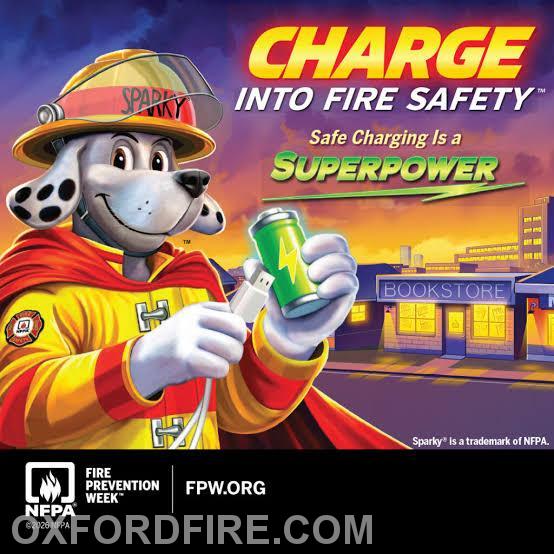
| Fire Prevention Week 2026 takes place from October 4 to 10, with the National Fire Protection Association (NFPA) announcing this year’s theme as “Charge into Fire Safety: Safe Charging Is a Superpower.” As lithium-ion batteries now power many daily electronic devices—including smartphones, laptops, e-bikes, and scooters—it is essential for families to learn safe charging practices to reduce the risk of electrical fires.
Essential Safe Charging Reminders:
Use equipment that matches your device: Only use the battery, cord, and power adapter that come from the manufacturer or a reliable, certified brand. Cheap or uncertified replacements can often cause battery failure and fires.
Avoid overcharging: Unplug electronics when they reach a full charge. Leaving devices plugged in for extended periods can degrade the battery and lead to overheating.
Charge on hard, flat surfaces: Do not charge devices on beds, couches, or pillows, as these surfaces can trap heat. Always use a hard, flat, and well-ventilated space.
Keep exits clear: Avoid charging large items like e-bikes, scooters, or hoverboards near exit doors or main hallways. If a fire starts, you need a clear route for escape.
Store and dispose of batteries safely: Keep batteries away from direct sunlight, extreme heat, or freezing temperatures. If a battery is damaged or fully depleted, do not place it in regular trash; take it to a battery recycling center.
Warning Signs of a Failing Battery:
Immediately stop using your device and move it away from anything flammable if you observe any of the following signs:
1. The device has an unusual odor.
2. The battery or casing shows discoloration.
3. The battery is bulging, swelling, or leaking.
4. The device becomes abnormally hot while charging or in use.
5. The battery makes strange sounds such as cracking, popping, or hissing.
By staying alert and practicing these safe charging habits, you can protect your home and gain valuable fire safety skills during Fire Prevention Week and beyond. |